Uncategorized

Tepeilwitl

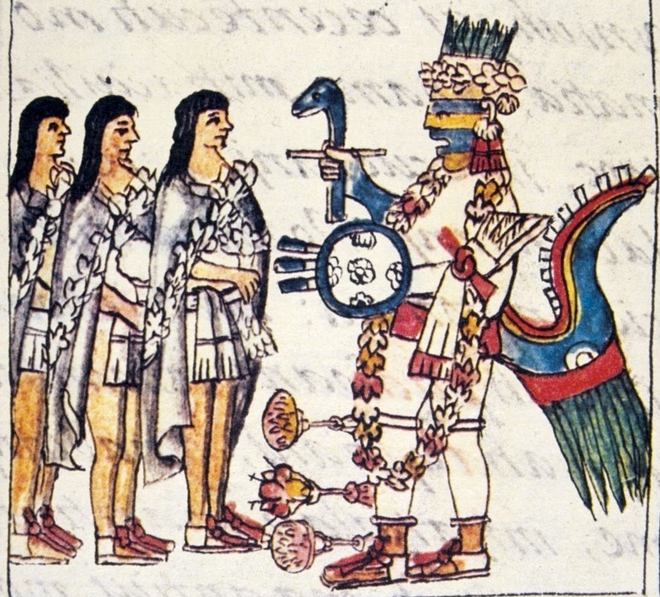
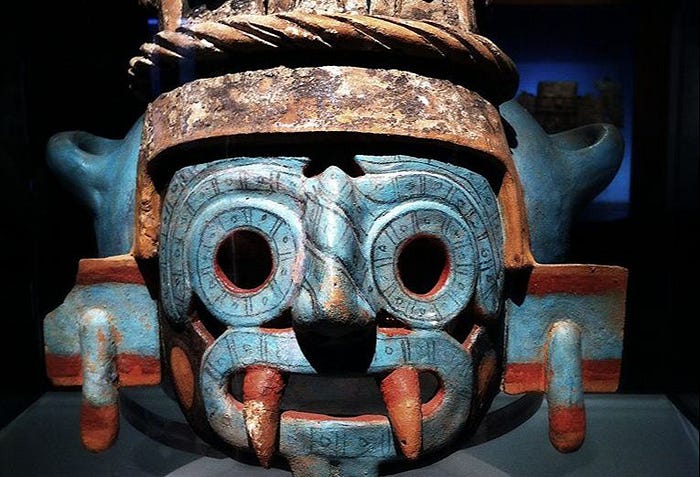
Tlalok vessel from the Templo Mayor in Tenochtitlan.

The twelfth month of the traditional Mexika calendar system is known as Tepeilwitl, “the Feast of the Mountains.” It is believed that the Teteoh known as Tlalok, along with his helpers the Tlalokeh reside within the mountains and misty caves that dot the Mexican landscape. Tlalok and the Tlalokeh are responsible for the rain and are venerated heavily in Mesoamerican cosmovision.

The feast of Tepeilwitl is held in honor of the mountains, Tlalok and the Tlalokeh, and the people who had died water-related deaths. It was thought that those who died by drowning had been selected by Tlalok to join him in Tlalokan, “the place of Tlalok.” The festival also honors the Teteoh known as Xochiketzal, who is considered the female counterpart of Tlalok. During the feast, small figurines representing serpents and mountains are made from amaranth dough and consumed.

Book two of the Florentine Codex provides the following description of Tepeilwitl (pages 23–24):

“In this month they celebrated a feast in honor of the high mountains, which are in all these lands of this New Spain, where large clouds pile up. They made the images of each one of them in human form, from the dough which is called tzoalli, and they laid offerings before these images in veneration of these same mountains.

In honor of the mountains, they made several serpents of wood or the roots of trees, and they fashioned them heads like those of serpents. They also made lengths of wood, as thick as the wrist, and long. They called them ekatotonti. These, as well as the serpents, they overlaid with that dough which they call tzoalli. They covered these pieces in the manner of mountains. Above, they placed the head, like the head of a person. Likewise, they made these images in memory of those who had drowned in the water or had died such a death that they did not burn them, but rather buried them.

After, with many ceremonies, they had placed upon their altars the aforementioned images, they also offered them tamales and other food; they also uttered songs of their praises, and they drank pulque in their honor.

Upon arrival of the feast in honor of the mountains, they slew four women and one man. The first of these women they called Tepexoch. The second they called Matlalkweye. The third they named Xochtekatl. The fourth they called Mayawel. And the man they named Milnawatl. They decked these women and the man in many papers covered with rubber. And they carried them in some litters upon the shoulders of women highly adorned, to the place where they were to slay them.

After they had slain them and torn out their hearts, they took them away gently, rolling them down the steps. When they had reached the bottom, they cut off their heads and inserted a rod through them, and they carried the bodies to the houses which they called kalpulko, where they divided them up to eat them. The papers with which they arrayed the images of the mountains, after they had broken them to pieces in order to eat them, they hung in the kalpulko. Many other ceremonies were performed in this feast.”
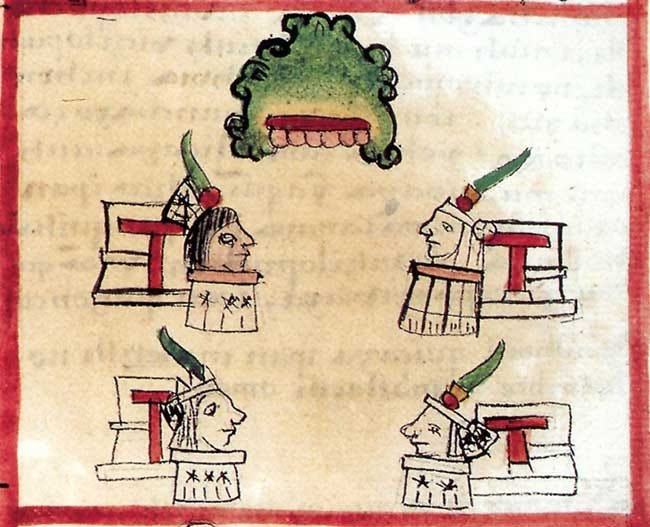
Amaranth figures made for the Tepeilhuitl ‘Feast of the Mountains’ (mountain glyph at top); Primeros Memoriales (Sahagún), early colonial, fol. 252r

The Florentine Codex continues (pages 131–133):

“All of the serpent representations which were kept in people’s houses, and the small wind figures, they covered with a dough of ground amaranth seeds.

And their bones were likewise fashioned of amaranth seed dough. They were cylindrical. Either fish amaranth or ash amaranth was used.

They also fashioned images in the form of mountains for those who had died in the water, who had been drowned, or else had been struck by lightning.

And for whoever had died and who had not been burned, who had only been buried, they also made representations of mountains. They made them all of amaranth seed dough.

And upon the eve of the feast, toward sundown, there was the bathing or the washing of the surfaces of the figures’ frames. When they bathed them there, they went blowing wind instruments for them; they went blowing pottery whistles and little seashells.

And they bathed them there at the Mist House; with fresh cane shoots they washed their surfaces. And some bathed them only at their own shores. And when they had been bathed, then they were returned here; in the same manner they came blowing wind instruments for them; it was as if they came shouting. Thereupon they were given human form; they were adorned. They gave them their foundation.

And some gave them their foundation well on into the night. Thus they gave them human form: they applied liquid rubber to the faces of the figures and they placed a spot of fish amaranth upon their cheeks; they dressed them in paper banners and they fitted them with their paper headdresses of heron feather ornaments.

And for those who had died in the water, they placed their images only on circular jar rests of grass. They made the images of amaranth seed dough.

And when it dawned, then they were set up in each one’s house upon reed foundations made perhaps of thin, fine reeds; perhaps of wide reeds; of large white reeds; perhaps of hollow reeds. On these they placed them.

And when this was done, when they had arranged them, thereupon they laid offerings before them. They offered them fruit tamales, and stews, or dog meat, or turkey hen. And they offered them incense.

And at this time it was stated: “They are laid in the houses.” And where there was riches, there was singing, and there was drinking pulque for them. But elsewhere all they did was make offerings to them.

And upon the feast day there died some women who were representations of the mountains.

The first was named Tepexoch; the second, Matlalkweye; the third, Xochtekatl; the fourth, Mayawel, representation of the maguey. The fifth was named Milnawatl; this one was a man who represented a serpent.

Their array, their paper headdresses, their paper vestments were painted with liquid rubber; they had much rubber; they were full of rubber. And the adornment of Milnawatl was in the same manner.

Early in the morning they started them off. They went carrying them in their arms on litters. It was stated: “They provide them with litters.” There they each went; there they each sat up in the litters. They took them in a roundabout procession. Only the women carried the litters in their arms. They went singing for the victims.

And the women who carried the litters were well arrayed; they were properly set up. All new were their shifts, their skirts, which they had put on them. And their faces were painted; they were pasted with feathers.

And when it was the time for it, when it was time for them to die, thereupon they set down the litters. Then they were each brought up to the top of the Teokalli; they went leaving each one there at the Teokalli of Tlaloc. And when they had brought them there, then they stretched them on the offering stone. Then the officiating priests, the slayer stood forth. Thereupon they cut open their breasts.”
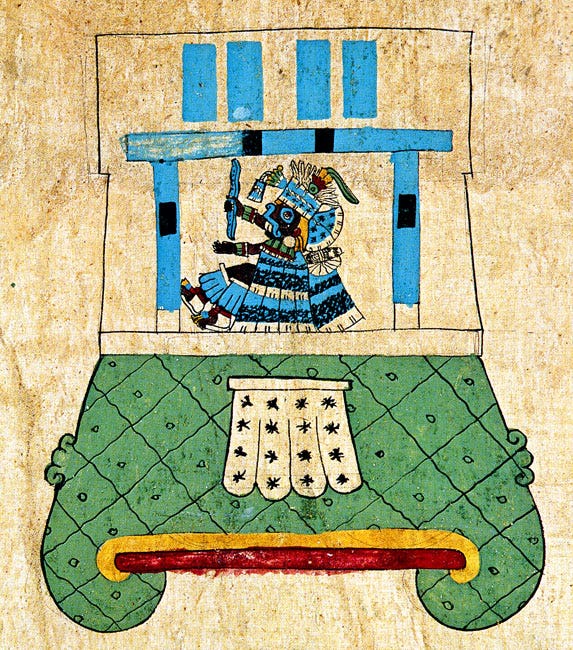
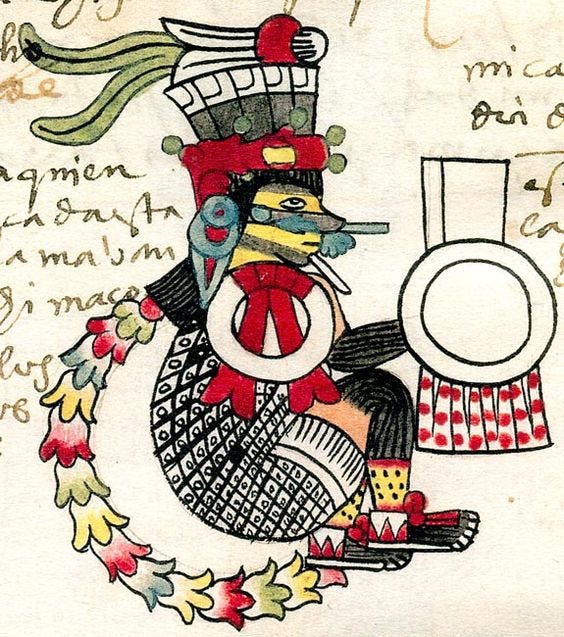
Tlaloc seated on his mountain throne, Codex Borbonicus.

“And when the victims had given their service, when they had died, then they brought their bodies down here. And thus did they bring them down: they only went rolling them here; it was slowly that they went turning them over and over.

And when they had come bringing them down, then they took them to the skull rack. And when they had taken them there, then they cut off their heads; they decapitated them. There they inserted the crosspieces of the rack into their heads.

And when they had cut their heads off, their bodies they then took to the various kalpulkos whence the victims had been sent. And next day, at dawn, when it was said, “They are dismembered,” they were each dismembered.

Thereupon they dismembered the amaranth seed dough figures. And when they had dismembered each one, then they took them up to the roof tops. There they dried hard, they dried stiff. Little by little they went taking some of it when they ate it; gradually they finished it.

And with the paper array which had been theirs they covered the circular grass jar rest which they had used. And when they had covered them, they hung them from the roof of the kalpulko. For one year they went caring for them; then they went to throw them away, they went to scatter them there at the Mist House. Only the paper vestments did they scatter; but the circular grass jar rests they brought back.

Here ended the feast day which was called Tepeilwitl.”

Modern Interpretations of Tepeilwitl (adapted with permission from the work of micorazonmexica):

Figures of amaranth seeds with honey, or, if such cannot be made, of bread, representing the mountains, are made, and placed on the altar. Here, in the central valleys of Mexico, these are made to represent the mountains Tlaloc, Popocatépetl, and Iztaccíhuatl, and are given paper heads representing the Teteo of these mountains. These are the largest, and are surrounded by other, smaller mountain figures, representing the other, lesser mountains which ring the valleys. All are adorned with paper banners and flags which are spattered with liquid rubber or black ink. If you live elsewhere, then the mountains should represent those which are near you, to give honor to the mountains and the mountain Teteo who provide water and life.

Before the mountains on the altar, figures of snakes and bones, likewise made of amaranth, bread, or formed of cookies, are placed as offerings. The snakes represent rivers and lightning, and are offerings to Tlaloc and Chalchiuhtlicue, whose home is in the mountains, and the bones are offerings for the dead who had been called by Tlaloc, and who now reside in His kingdom. We give thanks to the Tlaloc, the lord of the mountain, to the mountains themselves, and to our beloved dead who reside within. 

Wreathes, which where possible are made of pachtli or Spanish moss tied with dried grass, or of another leafy plant of the season where Spanish moss does not grow, are made. They are sprinkled with spring water, and hung above the household altar, where they will remain for the entire year. They are adorned with paper flags, and figures of tlaloc, shells, and aquatic creatures made of paper and clay. With them we give thanks to Tlaloc, and remember His gift of water throughout the year. Pachtli is also hung upon the altar, and all about the house, as a decoration symbolizing Tlaloc during Tepeilhuitl

Family, friends, and calpulli gather, and partake in a joyous Tepeilhuitl feast. At the close of the meal the dough mountains are removed from the altar, to the smoke of copal and the ringing of conch trumpets, and with a knife their summits are cut. This symbolizes their sacrifice, the act through which they give of themselves for the sake of all the living beings who live in the shadows of their slopes. They are sacrificed, for in this season the rains cease and the vegetation which wreathes the mountains dies. The precious “souls” of the seeds of maize and other foods shall dwell in the mountain throughout the season of Tonalco, before they are born again with the rains of Xopan. We give thanks to the mountains for storing the seeds of our abundance, and for guarding the souls of our beloved dead. We give thanks to Tlaloc and Chalchiuhtlicue for their gift of water by which we live. 

The sacrificed mountain figures are cut to pieces and given to the guests, who eat them, and thus partake in the abundance of the mountains. If anyone is ill, they are given the dough snakes to eat, for with them Tlaloc shall bless them. The person who leads the ceremony then takes grains of corn in four colors, in red, black, white, and yellow, and scatters them to the four directions, asking that the Teteo of the corn return and fill the world with abundance, as all cry out in joy and gratitude for the gifts of plenty with which the Teteo shower us.”

Uncategorized

Mikailwitl / Tlaxochimako

Tlaxochimako (offering of flowers) is the 8th month of the Mexikah calendar system. It was also known as Mikailwitl or Mikailwitontli (the small feast of the dead.) Like most of the other months in the Mexikah calendar system, Tlaxochimako lasted 20 days.

The feast was characterized by the collection of flowers from nearby mountains, which were then fashioned into garlands and used to adorn the idols of the various Teteoh. As with most other feasts, the festivities included sumptuous meals which were painstakingly prepared the night before, and a day filled with music, song, and dance. This feast is notable for one dance in particular in which the city’s sex workers, known as the awianime (ahuianime), danced with high ranking warriors (more about this below).

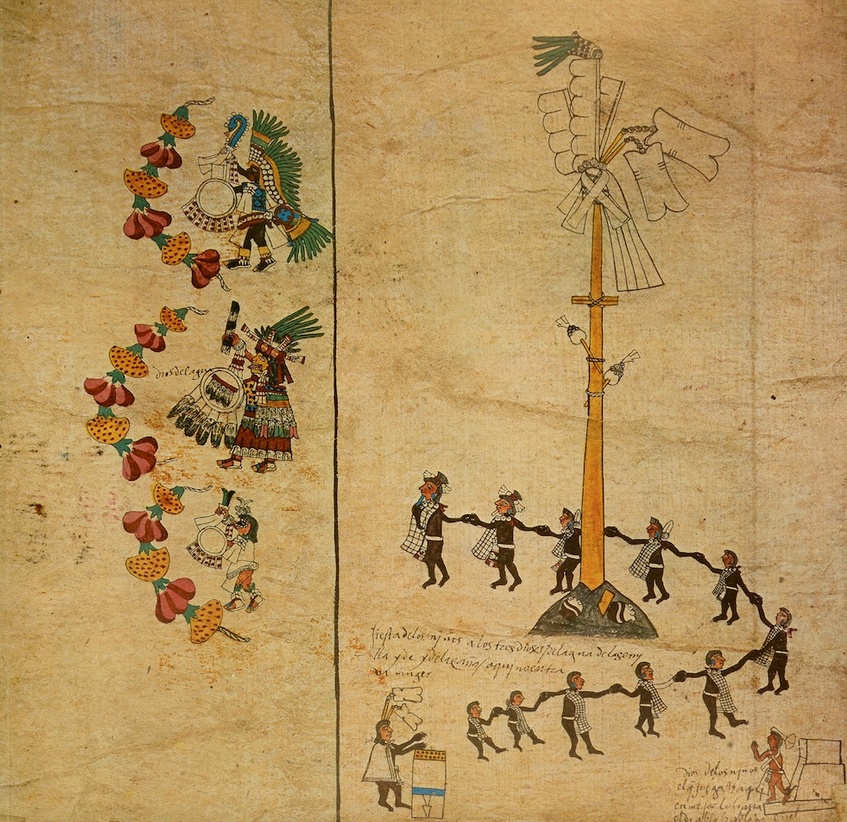
Along with the gathering of flowers, a large tree was cut down and brought into the city. This tree was stripped of its branches, decorated with paper vestments, and erected in the central plaza of Witzilopochtli. It was known as the Xokotl pole. Dances were performed around the pole.

As previously mentioned, this feast was also known as “the small feast of the dead,” and honored the children who had recently passed away. Offerings of chocolate, candles, seed, and food were made to the deceased children. In time, this celebration (along with the following monthly feast of Wey Mikailwitl which honored dead adults) were morphed into the modern-day “Dia de Muertos.” Diego Duran makes the following observation in his Book of the Gods and Rites and The Ancient Calendar.

“I have already mentioned that the first reason for the name Feast of the Little Dead was due to the offerings made for deceased children. I wish to refer to something I have seen take place on the Day of Allhallows and on the Day of the Faithful Departed. In some towns, offerings are made on Allhallows, and further offerings take place on the Day of the Faithful Departed. When I asked why offerings were made on the Day of Allhallows, I was told that this was in honor of the children, it being an ancient custom which had survived. I inquired whether offerings were also made on the Day of the Faithful Departed, and the answer was, “yes, in honor of adults.” I was sorry to hear these things because I saw clearly that the Feast of the Little Dead and [the Feast] of the Adults were still being celebrated. On the first I saw people offering chocolate, candles, fowl, fruit, great quantities of seed, and food. On the next day I saw the same being done. Though this feast fell In August, I suspect that if it is an evil simulation (which I do not dare affirm) the pagan festival has been passed to the Feast of Allhallows in order to cover up the ancient ceremony.” — Book of the Gods and Rites and The Ancient Calendar, Page 442

Duran’s observation is important, because it reveals that embedding the traditions of Mikailwitl and Wey Mikailwitl into the Catholic holidays of Allhallows and Day of the Faithful Departed was a survival strategy employed by the Indigenous people themselves, not a plan concocted by Catholic priests. The process of combining older rituals into another religion is known as Syncretism, and is intended to help ease religious conversion. While Catholic priests often employed syncretism as a strategy of conversion in the “New World,” this is not what happened with the festivals of Mikailwitl and Wey Mikailwitl. This subversive act of resistance was intended to fool the Catholic priests into thinking the Mesoamericans had, indeed, submitted to Christianity.

More information regarding Mikailwitl/Mikailwitontli can be found in the Codex Telleriano-Remensis, which states the following:

“During this feast they made offerings to the dead, placing food and drink on their tombs, which they did for four years. for they believed that during all this time the souls had not yet gone to their place of rest, according to their belief. And thus they buried them dressed with all their clothing and shod, for they believed that until they arrived at the place where the souls went at the end of the four years, they had much toil, cold, and weariness because they had to go through places full of snow and thorns. And that is why when an important person died they also killed and buried a slave at the same time, so that he could serve him. The Mixtec, Zapotec, and Mixe people honored their dead in a way almost like the Spaniards, for they built a tomb covered in black and placed much food around it. The way of burying the dead was just like ours. the feet of the dead pointed toward the east. And after the bodies had been eaten away, they un-earthed the bones from the tomb and put them in ossuaries made of mortar in the patios of their temples. This was [done by] the Mixtecs and Zapotecs, for the Mexicans did not bury them but cremated the bones: and the Mexicans took this practice from the Otomi people, or Chichimecs, who are the most ancient inhabitants of this land.” — Codex Telleriano-Remensis folio 2r.

For a more detailed look at this feast, here is the complete description taken from Florentine Codex

From the Florentine Codex, Book 2 Chapter 9:

“On the night before this feast, all busied themselves in killing fowls and dogs, in order to eat them, and in making tamales and other things concerned with food. Then, very early in the morning of this feast, the priests of the idols decked Witzilopochtli with many flowers; and after the statue of this Teteoh was adorned, they decorated the statues of the other Teteoh with garlands and strings and wreaths of flowers. And then they decked all the other statues in the calpulcos and young men’s houses. And in the houses of the mayordomos and leading men and common folk, all decorated with flowers the statues which they had in their houses.

Having decorated the statues of all the gods, they then began to eat that fare which they had prepared the night before; and a little after eating, they started a kind of dance in which the noblemen, with women, together danced grasping each other’s hands, and the ones embracing the others, arms thrown about each other’s necks. They did not dance solemnly in the manner of a ceremonial dance, nor did they go through the movements of a ceremonial dance; but they went step by step, to the rhythm of those who beat [the drums] and sang, all of whom were standing, a little to one side of those who danced, near a circular altar which they called momoztli.

This chanting lasted until nightfall. Not only in the temple courtyards but in all the houses of the leading men and the common folk they beat the drums and sang with a great din until night. And the old men and the old women drank wine; but no young man nor young woman drank it. And if [any] of them did drink it, they punished them sorely. Many other ceremonies were performed in this, which are [described] at length. Etc.” 

Florentine Codex Book 2, Chapter 28:

“It also was of twenty days.

Two days [before the feast] there was the seeking of flowers. There was scattering over the mountains when there was looking for every flower — various flowers, mountain flowers, dahlias, hummingbird flowers, mountain tagetes, ranunculus, bocconias, tiger lilies, plumerias, didymeas, forest magnolias, talaumas, earth plumerias, tagetes, lobelias, white water lilies, red water lilies, castalias. And when they had been gathered, when they had come bringing the flowers, when there had been coming bringing [them], when it was dawn, then they were strung together. There was stringing; they strung them. And when the flowers had been strung together, then they were twisted, they were wound [in garlands] — each indeed long, each very long, each thick, indeed thick. And when there had been the arranging, then carefully they were each set down; they were indeed handled with esteem, they were cared for with reverence.

Tezkatlipoka adorned with flowers. From the Codex Tudela folio 19r

And when this was done, all the common folk together fell to making tamales for themselves. In the evening they plucked turkey hens and [killed] dogs; also in the evening they singed them. Those were singed which would be required early in the morning.

There was confusion. There was indulging in sleeplessness; there was wakefulness. There was living for the feast day. It was as if each one was active; there was preoccupation on the part of each one so that there would be preparation.

And when the day broke, the priests thereupon each made offerings to Witzilopochtli; they adorned him with garlands of flowers; they placed flowers upon his head. And before him they kept spreading, they kept lining up, they kept placing in rows, they kept hanging in rows all the various flowers, the precious flowers, the gifts made as offerings. Thereupon flowers were offered all at the same time to all of the Teteoh, the images of the Teteoh. They were adorned with flowers, they were girt with {garlands of) flowers; flowers were placed upon their heads there in the temples.

Witzilopochtli adorned with flowers. From the Florentine Codex, Book 2 folio 60v

Thereupon all at the same time in all the houses in the homes of the stewards, in the homes of the great noblemen, and [in] each of the young men’s houses, they all laid them out [before the idols]; they all spread them out in people’s homes.

And when this was done, when they had been ornamented, then there was eating, there was drinking. Everywhere there was eating, there was celebration of the feast day.

And when midday came, then there were singing and dancing. Verily they ornamented all the youths, the masters of the youths, the leaders of the youths, the seasoned warriors, the shorn ones, the Otomi. There in the courtyard, in the courtyard of [the Temple of] Witzilopochtli, there was dancing.

The left side of the page shows wreaths of flowers and the Teteoh who were honored at this festival, while the right side shows children dancing around the Xokotl pole. From the Codex Borbonicus.

And those who led were the shorn ones, the great, brave warriors, each of whom was considered [equal to] a battle squadron, who did not hide themselves behind something in war; they who turned [the enemy] back, they who wheeled them around. Also the women danced — not one’s daughters [but] the courtesans, the pleasure girls. They went, each one, between [pairs of the men]; they each went grasped in their hands; they were grasped about the waist. They were all in line; they went all in line; they went winding to and fro. Nowhere did the line break; nowhere were hands loosed. They went in order.

And the singers, those who sang for them, those who beat the drums for them, who beat the ground drums for them, were quite apart, quite to one side. They were against a building, against a round altar [or pyramid]. And the altar was completely round, circular, like a spindle whorl. Against it, by it, stood [the musicians].

And as they danced, they did not keep leaping nor did they make great movements; they did not go making dance gestures; they did not go throwing themselves continually” about, they did not go dancing with arm movements, they did not continually bend their bodies, they did not continually go whirling themselves, they did not keep going from side to side, they did not keep turning their backs.

It was quite quietly, quite calmly, quite evenly that they went going, that they went dancing. Very much as a serpent goeth, as a serpent lieth, was the dance. None disturbed, none intruded, none encircled,’ none broke in.

And those who embraced the women were only the great, brave warriors. But those who were only masters of the youths did not embrace them.

And when there was an end to the dancing, there was only a little sun; already the sun was about to set. There was dispersing, there was going on the part of each one.

And everywhere in the houses, there was singing; there was singing in each one. They sang for their gods: perhaps Omakatl, or Chikome Koatl, or Ehekatl, or Koatl Xoxowki. Over here, over there, there was singing; song was widespread. Cries were widespread; cries were widespread as there was singing. The singing kept reechoing in a great din.

And only the revered old men and the revered old women drank pulque. And he who became really drunk cried out at people or boasted of his manly deeds.”

Modern Interpretations of Mikailwitl / Tlaxochimako (adapted with permission from the work of micorazonmexica):

Houses and altars are decorated with flowers, ropes of flowers are placed around our necks, and crowns of flowers on our heads. Men and women dance together, their arms about one another´s waists, or hands held, about a round altar dedicated to Xochiquetzal. Lovers present one another with flowers, as a sign of their desire, and they make offerings to Xochiquetzal, that She might bless their union with Her gift of love and poetry, and incense-bearers bless couples in love with the smoke of copal, that Xochiquetzal might smile upon them. We celebrate the sensual, and give thanks to the Teteoh for Their gifts of pleasure and joy.

Uncategorized

Wey Tekwilwitl

The eighth month they called Wey Tekwilwitl. On the first day of this month they observed a feast to the female Teteoh named Xilonen (the Teteoh of the tender maize). On this feast they gave food to all the poor men and women – old men, old women, boys, girls – in honor of this Teteoh. They slew a woman, on the tenth day of this month, arrayed in the ornaments with which they represented the same Teteoh.

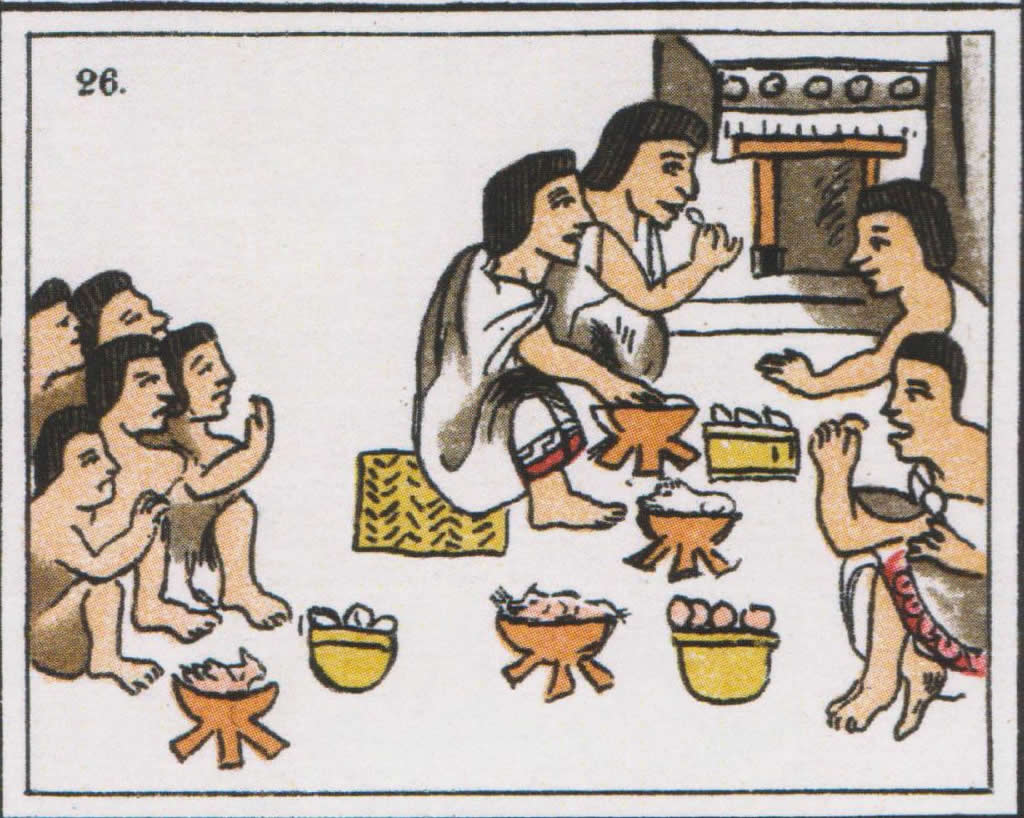
Wey Tekwilwitl from the Florentine Codex, Book 2

From the Florentine Codex (Florentine Codex, book 2, page 14):

“For eight uninterrupted days before the feast, they fed men and women, young and old. Then, very early in the morning they gave them to drink a kind of gruel which they call chienpinolli. Each one drank as much as he wished. And at noon they placed all in order, seated in their rows, and they gave them tamales. He who gave them [out], gave each one as many as he could hold in one hand. And if one of them exceeded the bounds of custom so much as to take [tamales] twice, they mishandled him and took from him those which he had, and he went with nothing. This [feasting] the lords brought about in order to give comfort to the poor; for at this time, ordinarily, there is a want of the necessities of life.

All these eight days they danced and moved in rhythm, men and women together performing the ceremonious movement, all heavily adorned with rich vestments and jewels. The women wore their hair unbound; they went with hair down, dancing and singing with the men. This dance began at sunset, and they continued in it until nine o’clock. They carried many lights (like great torches) of resinous wood, and there were many braziers or bonfires which burned in the same courtyard in which they danced. In this dance or solemn movement they went with hands joined [to those of other dancers], or embraced-the arm of one grasping the body of another as in an embrace, and the other likewise [holding still] another, men and women [alike].

One day before they slew the woman who was to die in honor of the goddess Xilonen, the women who served on the pyramid (who were called Ziwatlamakazkeh) performed a dance in the courtyard of this same temple, and sang the [hymns of] praise and the canticles of this goddess. They all went surrounding her who was to die [and] who went bedight in the ornaments of this goddess. In this way, singing and dancing, they kept watch all night before the day when she was to die.

And at dawn all the nobles and warriors performed a dance in this same courtyard, and with them also danced the woman who was to die, with many other women arrayed like her. The men went dancing in front, by themselves, and the women went behind them.

As soon as all, thus dancing, arrived at the pyramid where that woman was to die, they made her go above, up the steps. When she reached the top, one [of the priests] took her upon his back, shoulder against shoulder; and in this position, they struck off her head and then tore out her heart and offered it to the sun. Many other ceremonies were enacted in this feast.”

Modern Interpretations of Wey Tekwilwitll (adapted with permission from the work of micorazonmexica):

This is a time for those who are privileged and wealthy to contemplate their good fortune, and to pay back their debt. To be wealthy is relative. Unless you are homeless, or struggle to put food on the table, or find yourself unable to pay your rent or for the education of your children, you are wealthy. Your wealth may not be so great as that of your neighbor, but it is far greater than those less fortunate than you, who never had the opportunities you had, or who were brought down by the tricks and terrible mischievousness of Tezkatlipoka, such as alcoholics, or drug addicts, or people with mental health issues, and any other who has lost their way or never had an opportunity and consequently lives in poverty. Rather than judge others for having fallen, you should thank Tezkatlipoka for not having led you down the path He led them, for it is only through the tricks of destiny Tezkatlipoka plays upon us that some fall and others succeed. 

During this time, late in the rainy season, many of the common people had eaten most of the corn they had stored since the last harvest, but the new harvest was still unripe in the fields. Therefore, even as the earth bloomed, the people often went hungry. The feasts of Wey Tekwilwitl were a way for the wealthy to aid their poorer neighbors, and to help make it through that last difficult moment before the maize ripened. None who came to the banquets were turned away, and all joined in the dancing and merriment. 

Therefore, we should volunteer at homeless shelters or perhaps invite immigrants at a shelter to a feast or find other ways to help the poor and hungry, each according to our means, for the greater our wealth, the greater our responsibility. We look to the blooming of Our Mother the Earth and Zenteotl the Corn as He ripens on the stalk, and strive to be like Them, who give their fruit to any who tend the soil, and who provide for all Their children. 

Xilonen, who is another manifestation of the maize, is also honored on Wey Tekwilwitl. Xilonen is the young corn-plant, newly sprung from the earth. She is the tender stalk, yet to bear fruit. She is placed on the altar, together with Zenteotl, and given offerings of yellow fruits and yellow flowers. We dance for Her, the women in an inner circle closest to Her image, and the men in the outer circle, and all hold yellow flowers in one hand, and stalks of corn plants in the other. all wear crowns and necklaces of yellow flowers as well. The participants paint their faces with pyrite powder, or, if such cannot be obtained, with golden glitter. All who feel so called pierce their fingertips, tongue, or ear-lobes with maguey spines, and sprinkle their blood on strips of paper, which are offered to Xilonen, and later burned. A feast is then held for those who have participated, with much drinking of pulque, merriment, and joy, as all gathered cry out in thanks to Xilonen for Her gift of maize and life.

Xilonen, who is another manifestation of the maize, is also honored on Wey Tekwilwitl. Xilonen is the young corn-plant, newly sprung from the earth. She is placed on the altar, together with Zenteotl, and given offerings of yellow fruits and flowers. We dance for Her, the women in an inner circle closest to Her image, and the men in the outer circle, and all hold yellow flowers in one hand, and stalks of corn plants in the other, and all wear crowns and necklaces of yellow flowers. The participants paint their faces with pyrite powder, or, if such cannot be obtained, with golden glitter. All who feel so called pierce their fingertips, tongue, or earlobes with maguey spines, and sprinkle their blood on strips of paper, which are offered to Xilonen, and later burned. A feast is then held for those who have participated, with much drinking of pulque, merriment, and joy, as all gathered cry out in thanks to Xilonen for Her gift of maize and life.

Uncategorized

Kecholli

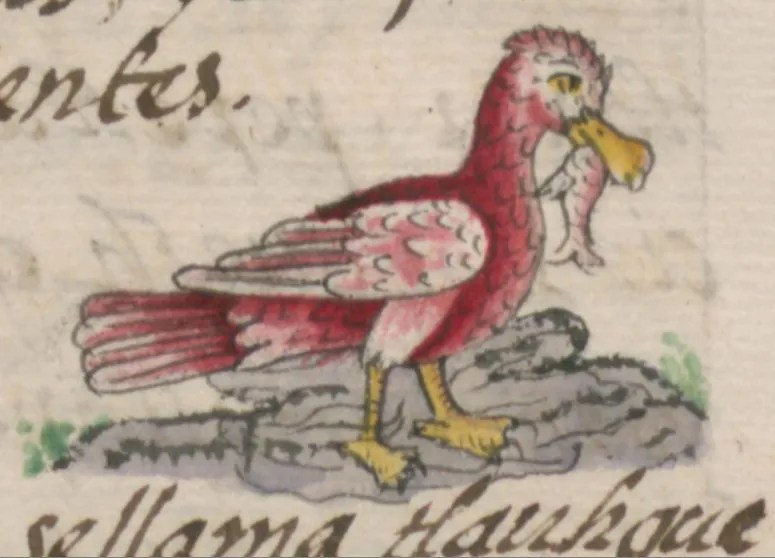
The symbol for Kecholli, from the Florentine Codex Book 11

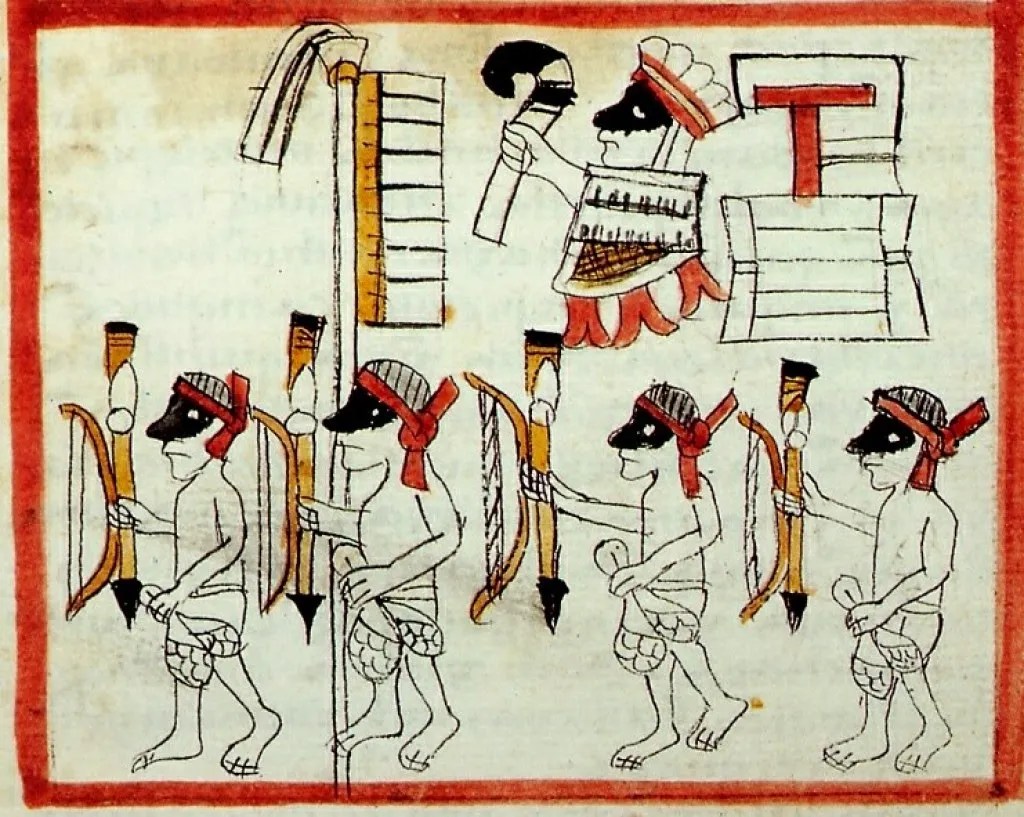
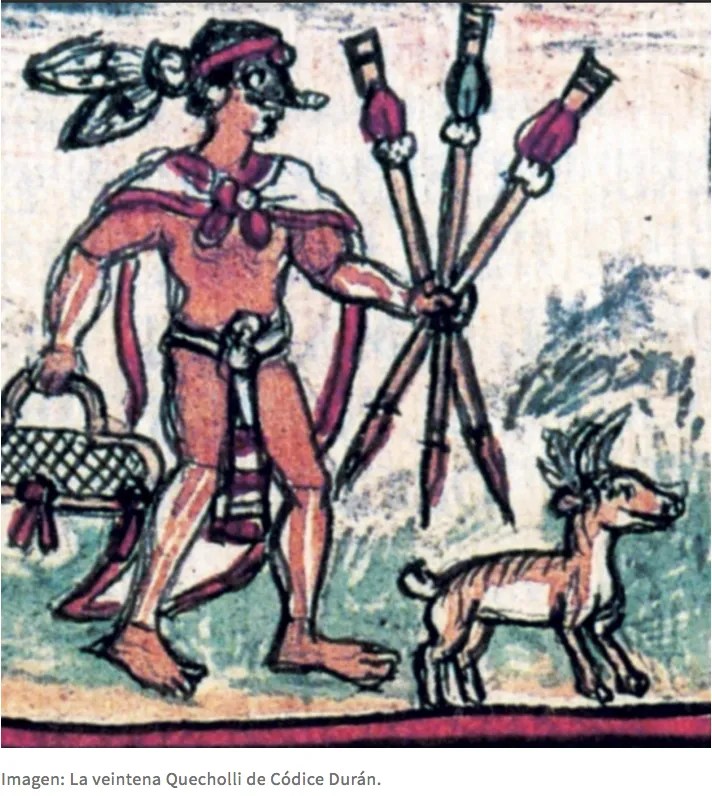
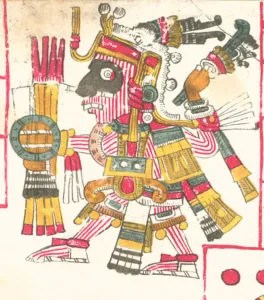
The feast of Kecholli is named for the roseate spoonbill, a bird with resplendent pink feathers that migrates south into Mexico during the winter months. The word Kecholli can be translated as “rubber neck” in the Nawatl language. The feast was held in honor of Kamaxtli/Mixkoatl, the lord of the hunt, who is depicted in the codices painted in red stripes and holding his hunting instruments. The first several days of the month were used to craft the arrows, darts, and spears that would be used in the upcoming hunt. During Kecholli we give thanks to the deer and the other creatures who give up their lives for our sake, so that we can eat their flesh and flourish. 

Most of us live in an urban environment, in which hunting is an activity which is no longer relevant to our daily lives. For the consumption of meat, we rely on farm animals. In the past, the only domestic animals were dogs and turkeys. But today, many of us eat cattle, pigs, and chicken as well. While these beings were unknown to our ancestors, it is appropriate to give them honor during Kecholli, for they, like us and the deer which our ancestors hunted, are in possession of consciousness and suffer and die for our sake. Just as our ancestors gave thanks and praise to the deer, we must give thanks to those creatures who die for us and become our flesh. We must always remember that they are our brothers and are as beloved by the Teteoh as we are. 


Hunters embark on the ceremonial hunt during Kecholli, from Primeros Memoriales

Because it is the feast of the hunt, it is also the feast of arrows. We give honor to the arrows who fly to their prey and bring down our brothers the deer, rabbit, and waterfowl. We give the arrows offerings, who are the instrument of death which brings us life. If you are a hunter, you ask the arrow, or the bullets and gun, to fly straight and true, and to bring death without suffering. If you are not a hunter, the arrow represents the death of the beings you consume. Remember that our ancestors practiced the honorable harvest. They gave thanks to the corn, and to the animals who die for our sake, and honored them as brothers. Perhaps this is a time to refrain from eating meat, and to contemplate the terrible suffering our animal brothers and sisters suffer, in the factory farms in which they live and die. Through the symbol of the arrow, it is a time to remember the honorable harvest, and to seek ways to return to the wisdom of our ancestors, who understood that the dying creature is not simply an animal we eat, but a brother who died so that we might live. 

During Kecholli, we give offerings to soldiers who have died in war. They were chosen by Tonatiuh, Our Lord the Sun, and descend to join us at our altars. We honor them for their sacrifice.

Finally, we give honor to Witzilopochtli during Kecholli, who is a manifestation of the Sun. Kecholli means “spoonbill,” which is a kind of water bird. The Roseate Spoonbill is pink, and its feathers were used to adorn the regalia of the Lords of the Sun. Therefore, the name of the metztli refers to the Sun, light, and fire. During the dry season of Tonalko, Witzilopochtli, who is fire and light, reigns, and we give Him honor.

From the Florentine Codex (Book 2, pages 25-26):

“When they made the arrows, for a space of five days all took blood from their ears, and with the blood they anointed their temples. They said that they did penance in order to go to hunt deer. Those who did not bleed themselves had their capes taken away as punishment. No man lay with his wife on those days; neither did the old men nor the old women drink pulque; because they did penance.

At the end of the four days during which they made the arrows and darts, they made a number of very small arrows, and bound them in fours with bundles of four torches. These they offered upon the graves of the dead. They placed also, along with the arrows and torches, two tamales. All this remained for a whole day upon the grave, and at night they burned it and performed many other ceremonies for the dead on this same feast.

On the tenth day of this month, all the Mexicans and Tlatelolkans went to those mountains which they call Zakatepek. And they say that this mountain is their mother. On the day that they arrived, they made huts or cabins of grass, and they lit fires, and nothing else did they do that day. Next day, at dawn, all broke fast and set out for the country and formed a great wing, wherewith they surrounded many animals deer, rabbit, and other animals — and little by little they kept coming together until they rounded up all of them. Then they attacked and hunted, each one what he could.

When the hunt ended they slew captives and slaves on a pyramid which they call Tlamatzinko. They Bound them hand and foot, and carried them up the steps of the pyramid as one carries a deer by the hind and forelegs to slaughter). They slew with great ceremony the man and the woman who were the ixiptla of the god Mixkoatl and of his consort. They slew them on another pyramid which was called Mixkoatkopan. Many other ceremonies were performed.”

Kamaxtli/Mixkoatl with his atlatl and darts, from the Codex Borgia

Modern Interpretations of Etzalkwaliztli (adapted with permission from the work of micorazonmexica)

The ceremonies of Kecholli are different for hunters than for other people. If you are a hunter, it is a time to give honor to the instruments of the hunt, to the bow and arrow or the gun and bullet, which did not exist in the world of our ancestors, but which is the way most hunters now kill our animal brothers. They possess power and should be thanked for the work they do. If you are an arrow maker, it is the time to make your arrows, and to make them offerings. They ask of you your own blood, in payment for the blood of the animal brothers they are to spill, pulled from the earlobes, fingers, and other fleshy parts, with maguey thorns. 

If you are not a hunter, arrows or paintings of arrows should nonetheless be placed on the altar. The arrows represent the deaths of our animal relatives and remind us of their suffering and death for our sake. On the altar are placed images of the animal beings we eat, of the deer, cow, turkey, chicken, fish, and other creatures. They have died for us, and are one with us, as part of our very flesh. We adorn their images with ribbons and paper flags and streamers, and beg their forgiveness for the suffering they endure, and thank them for their gift of life.

During Kecholli, warriors who have died in battle, or others who have died in the defense of a just cause, descend to the earth in the form of hummingbirds and honor us with their presence. To recognize their sacrifice, we make small arrows, no more than the length of the hand, and tied to form a cross. We place these upon the altar, together with offerings of sweet tamales. At the end of Kecholli these crosses are burned, and if we have a loved one who died in battle, the ashes are buried at their grave.

If a loved one has died as a soldier in war, we take a dry maize-plant, and tie it with 9 ribbon knots. The maize-plant is adorned with paper flags and streamers, and is dressed in a paper tilma, maxtlatl, and shield, or with the uniform of the dead soldier. A clay or paper hummingbird is hung from the plant, and bunches of white feathers which symbolize sacrifice. The soldier has become one with the maize and nourishes their community with their death. During Kecholli they descend to the altar from their home in the paradise of Our Lord the Sun and join us in our feasting. We give honor to them, and to all the brave men and women who have died in the defense of justice, or who died after having dedicated their lives to such causes. 

The altar is hung with moss, and on it, in addition to the arrows and offerings for the dead, are placed images of Mixkoatl, Cloud Serpent, who is the Lord of the Hunt, and of Witzilopochtli, the Hummingbird on the Left, who is a warrior and a Lord of the Sun. Those who battle in defense of just causes pray to Witzilopchtli to guide them, and hunters and farmers who raise and kill our animal brothers pray to Mixkoatl to guide them towards the sustainable harvest. Beside Mixkoatl is placed an image of Koatlikwe, Serpent Woman, who is His wife. He is the stars in the milky way, while She is the earth, and together They bring us all life. Her image is dressed in paper regalia, and paper weaving instruments are placed before Her. Her paper clothes and weaving tools are burned at the end of Kecholli by the women of the household, and honor is given to Her, for She weaves our destiny. 

Uncategorized

Wey Tozoztli

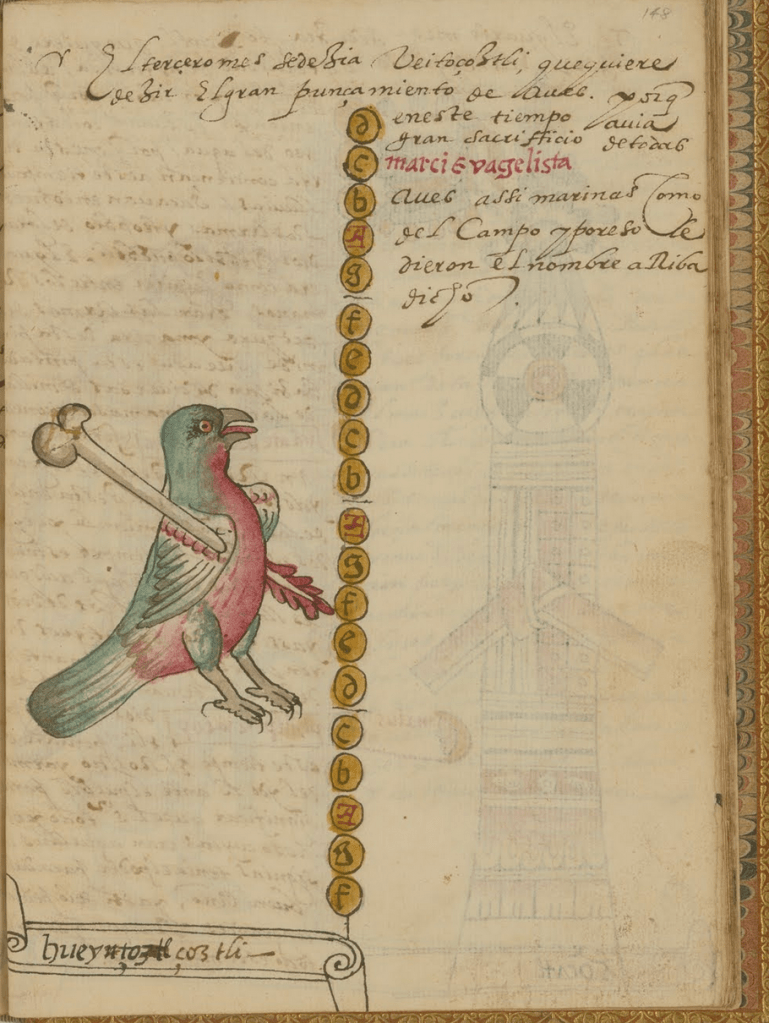
Wey Tozoztli – “the Great Perforation”

The third Zempowaltonallapowalli is called Wey Tozoztli, which means “the Great Perforation.” It is called this because towards the end of this Zempowaltonallapowalli the skies open, and the life-bringing rains begin to fall in torrents. The skies are “perforated,” they are drilled, and the waters which are held up in the heavens throughout Tonalko fall upon a thirsty Earth below. 

During Wey Tozoztli we give thanks to the Lords of Maize. We honor Chikomekoatl, Seven Serpent, who is the grown plant, who gives Her fruit for us to eat, and we honor Chikomexochitl, Seven Flower, also called Zinteotl, Our Lord the Maize, who is the cob itself, whose flesh we grind on the metate to make the tortilla which is the staff of life. They die for our sake, and so we give them honor and sacrifice as the rains begin to fall in earnest, and ask them to return, to be reborn, and to give us the gift of their miraculous flesh once more. 

Huey tozoztli. Primeros Memoriales, f. 250v.

In the past, and in many rural communities in Mexico still, our connection to the corn and the life of the fields was much more intimate. The purpose of the ceremonies of Wey Tozoztli is to seek the blessings of the Lords of Maize, so that the corn will grow with the coming of Xopan. However, today, most of us live in cities, or, even if we live in the country, we do not raise the maize we eat ourselves. Therefore, the ceremonies of Wey Tozoztli cannot be carried out as they had been by our ancestors, and still are in many Indigenous communities. But this does not absolve us of our responsibility to give thanks to the Lords of Maize or release us from our debt. We therefore spill our blood before Chikomekoatl and Zinteotl and give thanks to them for their bounty. We dance in ceremony and burn Kopal at our tlamanallis.

The Zempowaltonallapowalli of Wey Tozoztli is also a time of naming. Young children and babies are taken to the temple or tlamanalli at night, by the light of candles or torches, and are there given their Nahua names by the elders of the community. In the past, everyone was given their name as children at this time, but today, adults are given their names at the solstices and equinoxes, if they have come to these traditions later in life. Children receive their names during Wey Tozoztli for it is the start of the rains, when the maize in the field will begin to grow. They are given their names by the smoke of incense and the sound of conch trumpets, and they are given the tiniest of cuts, so that no more than a thin line of red appears, on their earlobes, and if male on their penis as well. This is a sign of our covenant of sacrifice with the Teteoh, and a beginning of the journey of sacrifice the Teteoh have asked of us. The children shall grow like the corn, blessed by the Teteoh and the Lords of Maize, whose divine bodies they will eat throughout their lives and who will transform into their very flesh, and in the first spilling of their blood, they begin the life-long process of repaying their debt.

Florentine Codex, Book 2, illustration 13

 From the Florentine Codex (Book 2, Page 7):

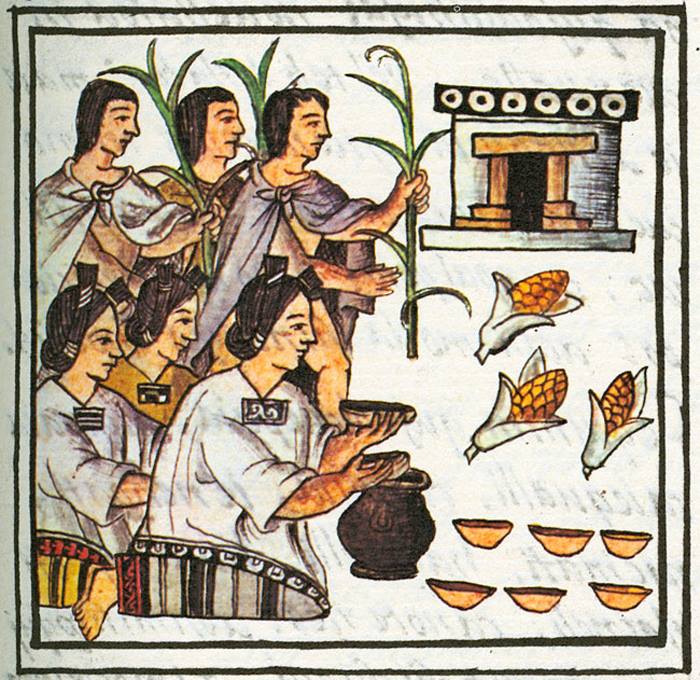
“In this feast they placed reeds at the doors of the houses. They sprinkled them with the blood from their ears or from the calves of their legs. Besides these, the nobles and the rich set up in their houses some branches which they called akxoyatl. Likewise, they set up branches for their gods, and set forth flowers for [the gods] which each one had in his house.

After this, they went about the maize fields and brought stalks of the maize (which was still small), and they garnished them with flowers and went to place them before their gods, in the house called kalpulli; and they set food before them.

Having done this in the various suburbs, they went to the pyramid of the goddess whom they called Chikomekoatl, and there, before her, they enacted skirmishes in the manner of battles. And all the girls bore upon their backs ears of maize [grown] the year before. They went in procession, to present them to the goddess Chikomekoatl, and they returned them once more to their houses as blessed thing[s]; and from them they took the seed to plant next year. And also, they put it away as the heart of the grain bins, because it was blessed.

They made of dough (which they call tzoalli) the ixiptla of this teotl in the courtyard of her temple; and before her they offered all kinds of maize, and all kinds of beans, and all kinds of chía. For they said that she was the maker and giver of all those things which are the necessaries of life, that the people may live.”

Offerings are made to the amaranth Ixiptla of Chikomekoatl, Florentine Book 2, illustration 14

Modern Interpretations of Wey Tozoztli (adapted with permission from the work of micorazonmexica):

If you are a farmer who raises corn, or can grow corn in your garden, the ceremonies of Wey Tozoztli can take place much as they did for our ancestors. If you are an urban dweller, or otherwise find it impossible to grow corn, then the ceremonies will be very different for you. But in either case, this is a time to give thanks to the Lords of Maize. 

Images of Chikomekoatl and Zinteotl are placed at dawn upon the tlamanalli, and hung with paper banners and flowers, and leafy branches are hung there as well. Before the images of the Teteoh beds of spanish moss are made, upon which pots of soup are placed. For those who can, stalks of dried maize from the previous year’s harvest are collected from the field or garden with the smoke of Kopal, and are brought back to the tlamanalli, and reverently placed there, for they are the divine body of Chikomekoatl. If you cannot find dried maize plants, simply decorate it with flowers, and place paper maize plants upon your tlamanalli instead, and give thanks to the Lords of Maize for their harvest. Five cooked frogs, or clay or paper images of frogs, are placed before the Lords of Maize. Frogs are symbols of the Lords of Rain and represent life and water. Likewise, they represent Zipaktli, one of the manifestations of Our Mother the Earth. Leaves from the maize plants are inserted into their backs, or if such cannot be found, paper flags. If the frogs are made of paper, these flags are laid down upon them. The corn leaves or paper flags symbolize the corn growing from the body of Our Mother the Earth. Finally, seven cobs of dry corn are placed upon the tlamanalli, to the sound of conch trumpets and the smoke of Kopal. All the papers, flags, and offerings are painted red, the color of sacrifice and blood. These offerings remain all day upon the tlamanalli. 

At night guests are invited to the ceremony who come with their own dried corncobs to cleanse with Kopal. The soup and frogs and other offerings are eaten with joy and merriment by the party. Young women take up the cobs of corn, in groups of no more than seven, and wrap them in their mantles or rebozos. 

Their legs and arms are painted red, and an elder dips a daisy in liquid rubber or black ink and spatters it across their faces. In the past the young women led the gathered people to the temples of Chikomekoatl and Zinteotl to venerate the seeds, but today their temples no longer exist. Therefore, they take them instead to the field or garden where the maize is to grow, for this is their home, and sacred to them, and here they, with the elders of her community, seek the blessings of our Mother and Father the Maize. With the smoke of Kopal we ask that they give us the gift of Their sacred flesh. The procession to the field takes place in silence. No one may speak, and if any speak, they should be reprimanded. If there are no fields or gardens at which to bless the corn-cobs, then the maidens should walk in a circle six times, perhaps around the block on which you live or even just in your living room, while honoring the four directions, of Our Father the Sky and Our Mother the Earth, and ask all of the Teteoh to bless the seeds and to bring abundance into our lives. The corn is then wrapped in papers and spattered with rubber or ink, and if you have a granary, they are placed there, and left there throughout the year, for they are its heart, they are the representation of Chikomekoatl, in whom She dwells. If you do not have a granary, they remain in your kitchen, on a tlamanalli, where they will bring abundance into your life. 

Wey Tozoztli, Codex Tovar